
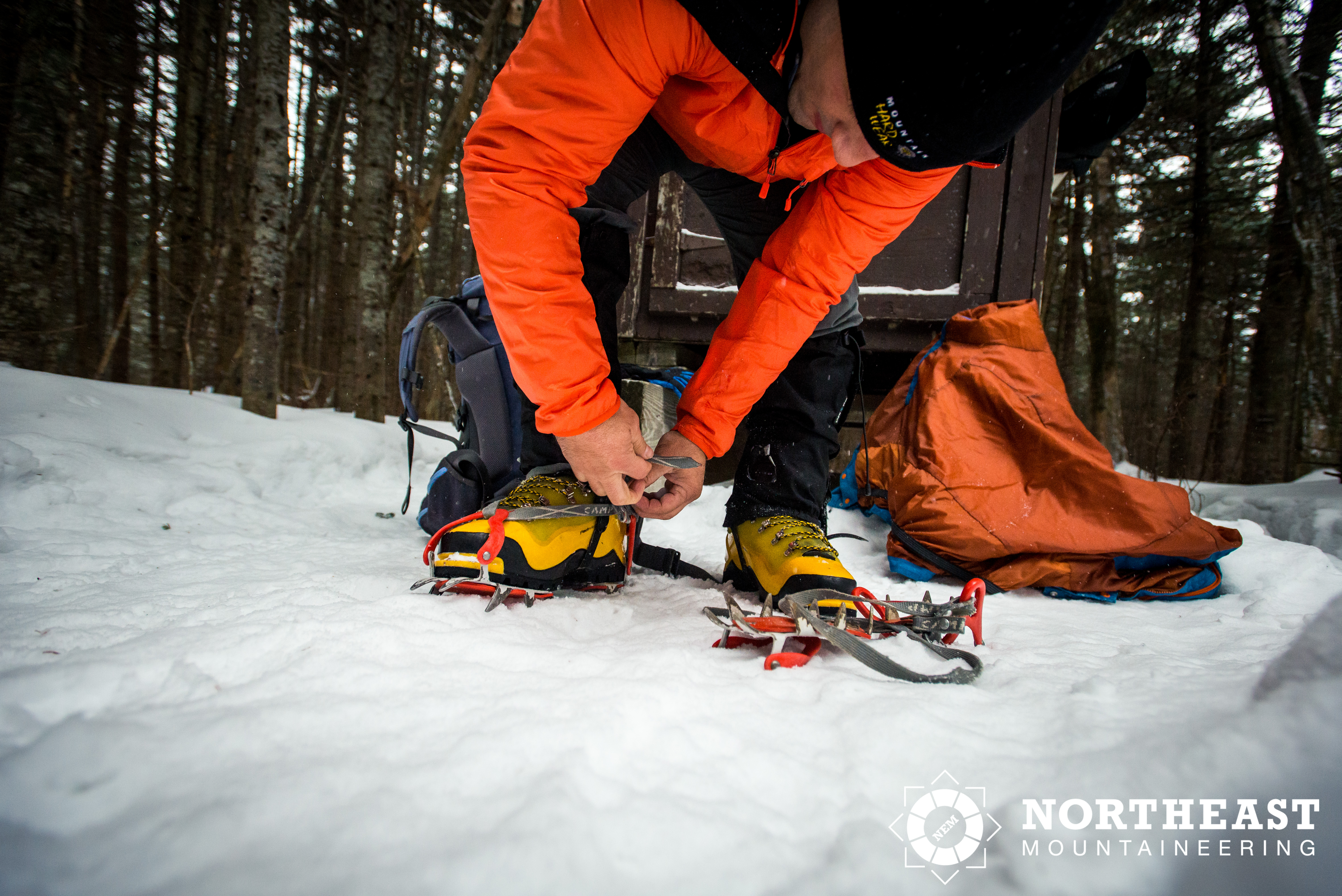
Traction has been a hot topic this past Winter and even still. With our low snow amounts over the past few months, the trails were mostly ice and many of the higher elevation trails remain as slick as ever. NEM Guide Mike Cherim recently found the Ammonoosuc Ravine Trail “Some of the worst trail conditions he has ever seen.” As we move into Spring in the mountains, we often see the trails take on a “monorail” of snow and ice directly in the middle of the trail. This can sometimes be a foot or more high. The snow gets packed down by hikers, snowshoers, and climbers all Winter. As the snow gets packed harder and harder, it eventually turns to ice. As we all know, ice melts much slower than fluffy snow so in the Spring we are left with icy trails with dirt and leaves everywhere else. Those who are unprepared will walk to the side of the icy trail, which in itself creates all kinds of other problems.
Knowing the trail conditions as they are, I am often conflicted about which traction I will need to stay safe and efficient. Every trip is different and the terrain will dictate what kind of traction I should bring along. I often find myself bringing 2 different types with me. I recently was part of a Search and Rescue team who had been called to look for two individuals who were in distress. When we located them, they were outfitted head to toe with the latest gear including radios, GPS, knives, firestarters, bivy sacks and more. Unfortunately, they overlooked traction. Luckily we brought extra with us and we were able to hike out without incident. They even admitted that had they had traction, they may never have called for a rescue. Here I will go over the different types of popular traction and their pro’s and con’s. Continue reading
 Tristan felt the pull of climbing from a young age while growing up in rural Wyoming. When he headed east to Dartmouth for undergrad, it was in part because of its reputation as a top skiing school and because it had good climbing nearby. He skied for the Dartmouth ski team, but found that competition in the east was as hard as the snow. He took his first climbing trip in the spring as a freshman and learned the ropes from the amazingly attuned and renowned instructor John Joline. He sallied forth trying to make sense of the world by exploring its heights and finding adventure along the way. In college, he lived and breathed climbing and history, then moved to Colorado before boomeranging back to New England. He enjoys all types of climbing, from pebble pinching to snow slogging, and believes any good day involves a heavily beating heart.
 We are proud to work with the Department of Agriculture, the White Mountain National Forest and the Androscoggin Ranger District where we are authorized outfitter guides.
